Knitwear yarns behind a RizzitGO sweater, scarf or pair of socks
Knit listings carry the most feel words and the least fiber information in their titles. The yarn is in the composition line, and on a sweater that line usually decides how it will look after a winter of wear.
Knitwear yarns, from wool blends to acrylic
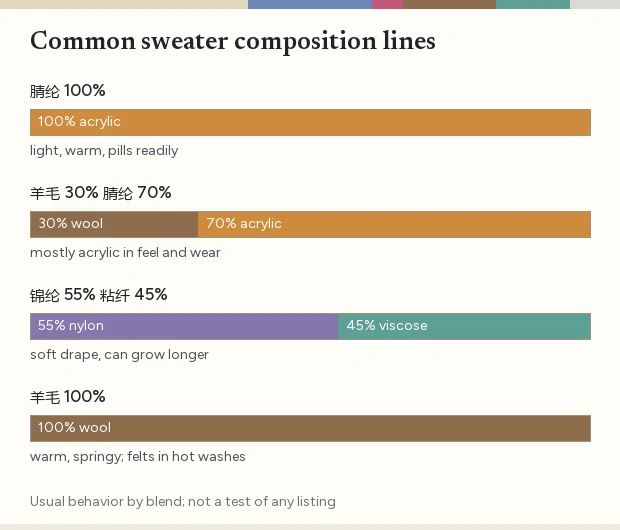
Sweater listings are where the composition line matters most and where it is easiest to miss, because the title is full of feel words and the fiber hides in the parameter block. The common lines are short: 腈纶 100% (acrylic), 羊毛 30% 腈纶 70%, 锦纶 and 粘纤 blends, and now and then 羊毛 100%.
Wool (羊毛) is warm, springy, slow to pick up odor and good at handling damp; it can itch depending on how fine the fiber is, and hot water with rubbing can felt and shrink it. Acrylic (腈纶) was made to imitate wool: light, warm for its weight, soft at first touch and inexpensive, but it pills readily, builds static and does not breathe the way wool does. Nylon (锦纶) in a knit adds strength and is often the base of fluffy novelty yarns. Viscose (粘纤) brings drape and a soft, cool hand to fine-gauge knits and makes them heavier and stretchier over time.
A blend usually behaves in proportion. A sweater with 30 percent wool feels and wears mostly like the other 70 percent.
Cashmere-feel acrylic and the other knit selling names
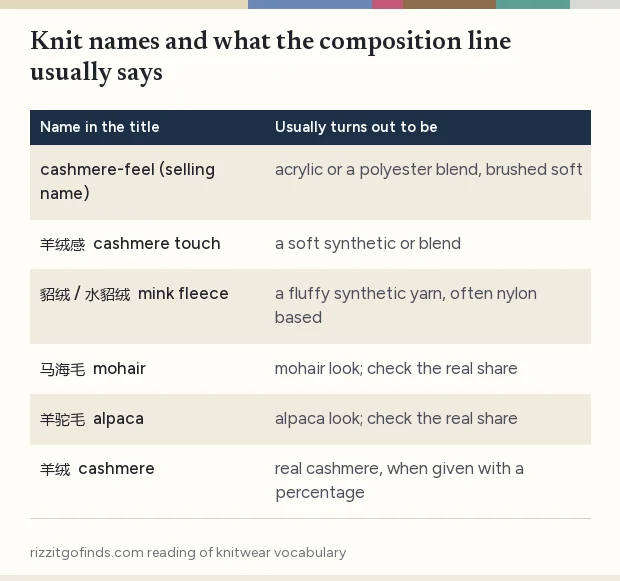
Knitwear titles use names that sound like fibers and usually are not. A common one translates as cashmere-feel: it almost always describes acrylic or a polyester blend brushed to feel soft, so read it as cashmere-feel acrylic and check the composition line. 羊绒感 (cashmere touch) works the same way.
貂绒 and 水貂绒 literally mean mink fleece. On sweater listings they usually describe a fluffy, long-haired synthetic yarn, often nylon or polyester based, and the composition line rarely mentions any animal fiber at all. 马海毛 (mohair) and 羊驼毛 (alpaca) are real animal fibers, but in a title they may describe the look of a yarn while the actual share on the parameter block is small.
Real cashmere is written 羊绒 on a composition line, with a percentage. A sweater that is 羊绒 100% at a fast-fashion price is the listing most worth an extra question before you pay.
Mohair-look and alpaca-look knits are bought for their halo, the soft fuzz that stands off the surface. That halo comes from long fibers, and long fibers shed, whatever the composition line says they are made of.
Wool shares that change the feel
Wool percentages on listings tend to cluster at a few levels, and each feels different in hand. A percentage tells you the wool share, not how a finished sweater must feel. Yarn fineness, twist, construction and finishing can make two equal blends behave differently. Compare the full composition and care label rather than treating percentage bands as quality grades.
Itch has less to do with the percentage than with how fine the wool fibers are. Fine wools, often sold as merino (美利奴), feel smooth against the neck; coarser wools prickle. Listings sometimes give the fineness in microns; most do not. If a material is unsuitable for you, do not treat a composition estimate or product photo as reassurance; obtain reliable product information before buying.
Wool can absorb moisture within its fibers; fabric construction and conditions still affect how damp it feels and how it handles odor. That is why wool socks and base layers keep their following despite the care they need.
Pilling, shedding and the shorter fiber
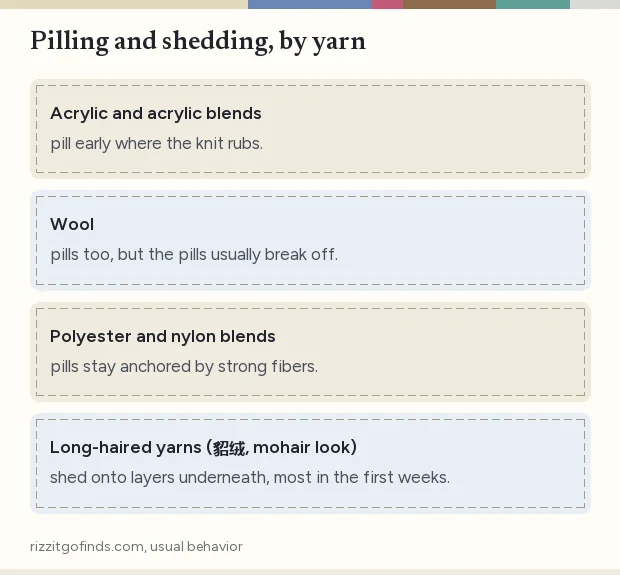
Pills are small balls of fiber that form where a knit rubs: under the arms, at the cuffs, where a bag strap sits. They come from short or loosely spun fibers working loose and tangling. Acrylic and acrylic blends usually pill early. Wool pills too, but wool pills tend to break off; pills on polyester and nylon blends tend to stay anchored because the synthetic fibers are strong.
Shedding is a different nuisance: long-haired yarns such as mohair-look and 貂绒 knits leave fibers on whatever you wear underneath, most of all in the first weeks.
Neither shows in a warehouse photo of a new sweater. A tightly knitted, smooth yarn usually pills less than a loose, fluffy one, and that difference is visible in close photos of the knit surface. That is one of the few fiber questions a picture can partly answer.
The same composition can behave differently in two sweaters: a brushed, fluffy finish pills sooner than a smooth, tightly twisted yarn, so a close photo of the surface adds something the composition line cannot.
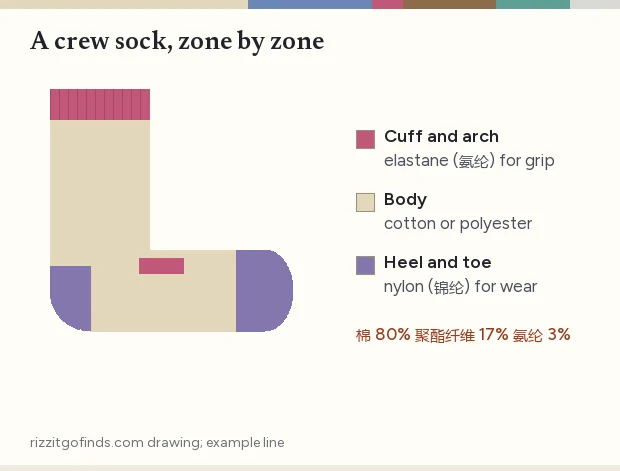
Socks: three fibers in one tube
Sock listings often name a single fiber in the title, 纯棉 or 精梳棉, while the sock itself is a blend. A typical crew sock is mostly cotton or polyester for the body, with nylon reinforcing the heel and toe where shoes rub and a few percent of elastane in the cuff and arch for grip. A composition line such as 棉 80% 聚酯纤维 17% 氨纶 3% is a normal sock, not a misprint.
Cotton-rich socks are soft and absorbent and stay damp; synthetic-rich sports socks dry faster and hold shape; wool socks are warm and handle sweat well. Thin dress socks are often largely nylon.
There is a RizzitGO detail specific to this shelf. Its return table places underwear, socks and leggings in an undergarments group that does not get the five-day return guarantee, so do not assume a change-of-mind return is available. Ask how a defect or incorrect-item case would be handled for the specific order. Read the composition before the order rather than after it.
Scarves and the scratch you cannot test from a photo
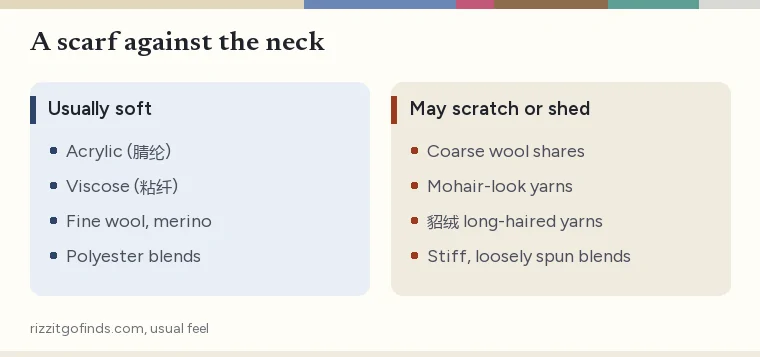
Knitted scarves follow the sweater rules: acrylic, wool, blends, and the same selling names. Woven scarves are more often acrylic, viscose or a polyester blend, sometimes with a small wool share. A scarf sits against the neck, which is the most sensitive skin a garment touches, so fiber matters more here than on a sweater worn over a shirt.
No photo shows itch. A scarf that is mostly acrylic or viscose is rarely scratchy; one with a coarse wool share may be, and a long-haired yarn will shed onto a dark coat. The composition line and, for wool, any mention of fineness are the only clues before delivery.
The catalog keeps scarves on their own scarves shelf. Read the parameter block there the same way as for a sweater.