
The RizzitGO Spreadsheet catalog, shelf by shelf, read by its cloth
Every shelf below opens on the product catalog. The note under each one says what that shelf is usually made of, so you know what to look for on the listing before you buy it through RizzitGO.
Sixteen categories, with material and specification checks
These are the same catalog shelves as on the home page, shown with a different crop and grouped by how the cloth is made: knitted from a single yarn, knitted from a yarn you should read twice, woven, or a shell with a fill inside. The kind label at the foot of each card says which.
 T-shirtsCotton jersey, sometimes with a little elastane; weight shown as 克重 when the seller gives itKnit shelf
 HoodiesLooped terry or a brushed fleece face, usually cotton, polyester or a mix of the twoKnit shelf
 SweatpantsThe same knits as hoodies, cut long; a rib cuff often carries elastaneKnit shelf
 OuterwearA shell fabric plus a fill line: down figures or polyester paddingFill shelf
 SneakersCompare the size chart and sole measurements.Category
 JeansCompare waist, rise and inside leg.Category
 Womenswear · Search resultsSearch results may mix categories; check each listing.Search results
 Sports jerseysConfirm team, season, size and any personalisation.Category
 BagsCheck dimensions, straps and included pieces.Category
 HatsCompare head circumference and adjustment.Category
 BeltsCheck usable length and buckle dimensions.Category
 EyewearConfirm frame width, lenses and included case.Category
 PerfumeConfirm liquid acceptance before paying.Category
 JewelleryCheck material, dimensions and fastening.Category
 WatchesCheck case size, movement and battery restrictions.Category
 ElectronicsConfirm model, voltage, battery and route acceptance.Category
Knit shelves: tees, hoodies and joggers
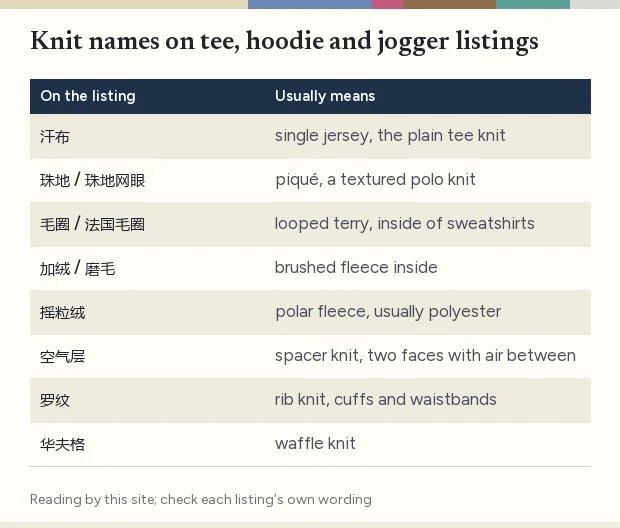
Knits are made from one continuous yarn looped into rows, which is why they stretch a little even with no elastane in them. On these shelves the composition line is usually short, often a single fiber, and the useful extra information is the fabric weight and the name of the knit.
A tee listing that says 汗布 is a plain single jersey; 珠地 is a piqué knit with a textured face; 毛圈 is looped terry, the inside of most mid-weight sweatshirts; 加绒 or 磨毛 means the inside has been brushed into fleece. Weight, written 克重, is given in grams per square meter of fabric when the seller gives it at all. The cotton knits page turns those numbers into thin, mid and heavy.
Joggers sit on the same yarns as hoodies. The waistband and cuffs are usually a separate rib knit, and that rib is where a small share of elastane tends to live even when the main body is all cotton.
Woven shelves and the text entries for jeans and pants
Woven cloth is two sets of yarn crossing at right angles. Stretch depends on yarn and construction; woven cloth can give without elastane. Edge fraying and creasing also depend on its construction and finish. Shell jackets, most shorts, chinos and every pair of jeans come from this side of the catalog.
Jeans, pants and scarves are text entries below because their shelves vary too much for one photo to stand for the cloth: a rigid indigo pair and a soft washed stretch pair sit side by side on the same shelf.
Each entry opens its shelf or search in the catalog and says which fiber page reads it. The drawing beside this text shows the one structural difference worth keeping in mind on every woven listing. Many woven listings also name the weave: 斜纹 is twill, 平纹 a plain weave, 牛津纺 oxford cloth.
- Jeans: denim, a cotton twill with indigo warp yarn; weight in ounces or grams, stretch from a small elastane share. Read with the denim page.
- Pants: cotton twill, polyester and nylon blends, and knit trousers that belong with the joggers. Ask whether the fabric is woven (梭织) or knit (针织) when the listing is unclear.
- Scarves: knitted scarves follow the yarn rules on the sweater and sock yarn page; woven ones are usually acrylic, wool or a viscose blend.
- Linen shirts: a catalog search rather than a shelf; linen and cotton-linen (棉麻) wovens that crease the moment you sit down.
Shelves this site does not read, and why
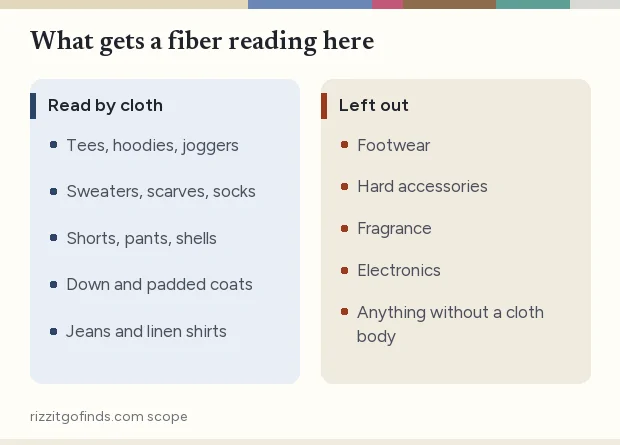
Some catalog shelves are not textile at all, or the cloth is a small part of what you are buying. Footwear, hard accessories, fragrance and electronics fall into that group, and a fiber reading would add nothing a listing does not already say. They are left out on purpose rather than covered thinly.
Two other limits are worth knowing. Womenswear has no single shelf in the catalog, so a dress is read by its cloth on the fiber pages, the same as anything else. And a catalog card is a pointer to a listing, not a description of it: sellers change listings, swap photos and sometimes change the composition between seasons. Read the listing you are about to buy from, on the day you buy.
If a shelf you rely on reads wrong here, the address on the About page reaches a person who can fix it.
How the shelf notes are written
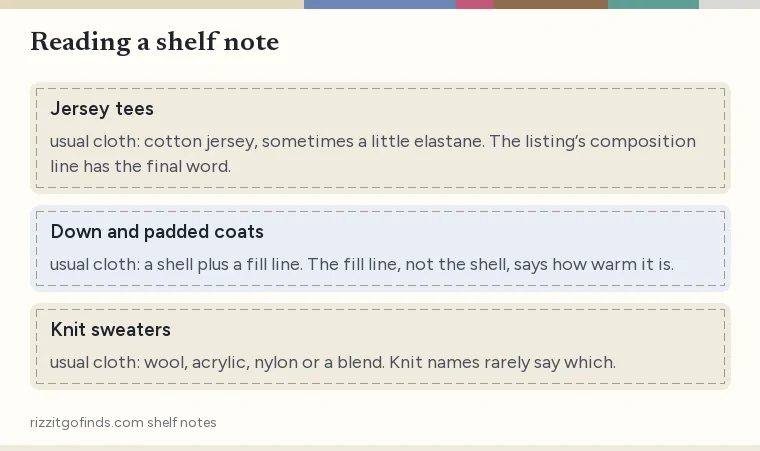
Each shelf note is a usual case, not a promise about every listing on that shelf. “Cotton jersey, sometimes with a little elastane” means that is what a plain tee listing most often shows; a polyester sports tee on the same shelf reads completely differently, and the composition line on its listing overrides the note.
The notes also say nothing about quality. Two listings with the same line, say 棉 100%, can feel very different because of yarn, knit density, weight and finishing. That is why the fiber pages spend as much time on gram weight and knit names as on fiber names.
When a listing gives no composition at all, the shelf note is only a guess about what you will receive. The order enquiry route described on the RizzitGO check page is how you ask before paying.
From a fabric description to a specific listing
A RizzitGO Spreadsheet is a catalogue of links, so start by opening the seller’s own page. Check the selected option, measurements, material description and quantity before transferring the link to the agent. The lowest displayed price may describe another variant. Keep the wording you relied on, especially when several shops use the same photograph.
A composition such as cotton with polyester describes a claimed fibre mix; it does not by itself establish fabric weight, softness, construction or fit. This site’s material reader explains expectations and questions to ask. It cannot test the garment. RizzitGO’s order and warehouse records are where you check the item that was actually purchased.